Wangdue Phodrang Festival |Wangdi Phodrang Festival Tour Packages |Wangdiphodrang Festival Tours|
(08 – 10 October, 2027)
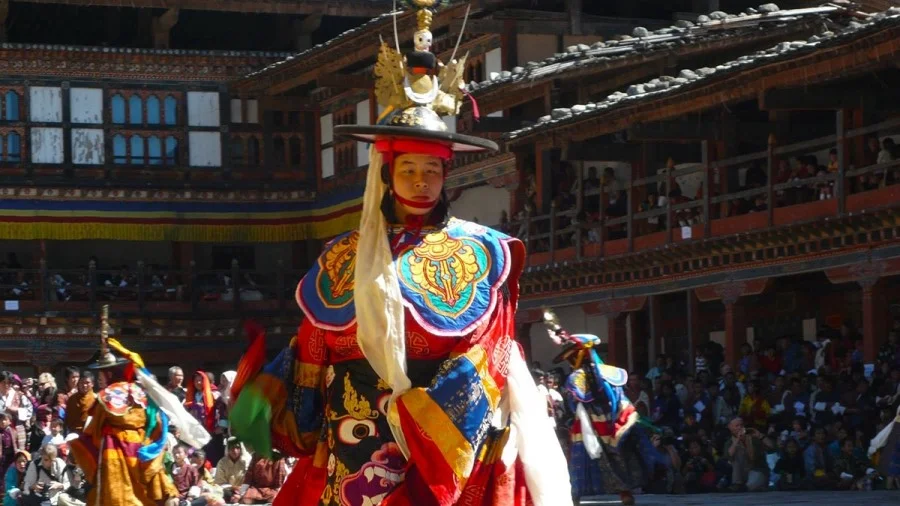
Wangdue Phodrang Festival Tour detail informations A Brief Description 06 Nights/07 days in Bhutan The Wangdue Phodrang Festival is one of Bhutan’s most significant annual religious festivals, celebrated over three days at the historic Wangdue Phodrang Dzong in central Bhutan. This sacred festival brings together local communities, monks, and visitors to honor Guru Rinpoche (Padmasambhava), seek spiritual blessings, and celebrate Bhutan’s rich Buddhist traditions. The Wangdue Phodrang Festival is more than a cultural celebration; it is a deeply meaningful religious occasion that reflects the close relationship between Buddhism, community life, and identity. One of the most revered highlights of the festival is the unfurling of the Thongdrol, a monumental sacred religious image displayed for devotees to receive its blessings. It is believed that viewing the Thongdrol with faith and devotion can help purify negative karma and accumulate merit. Wangdue Phodrang is a historically important district in central Bhutan, known for its strategic location, cultural heritage, and scenic landscapes. The name is commonly interpreted as “Palace of Wangdue,” reflecting the district’s historical association with the establishment of the dzong. The history of Wangdue Phodrang is closely linked to Zhabdrung Ngawang Namgyal, who established Wangdue Phodrang Dzong in 1638 during the unification of Bhutan. Located on a ridge overlooking the confluence of the Dang Chhu and Punatsang Chhu rivers, the dzong occupied a strategic position along important routes connecting western, central, and southern Bhutan. Over time, it became a major Centre of administration, religion, and regional culture. Wangdue Phodrang Dzong was admired for its traditional Bhutanese architecture and spectacular views of the surrounding valleys. However, a devastating fire in June 2012 destroyed much of the historic structure. The dzong was subsequently reconstructed with great care to preserve its architectural character and cultural significance. The restored dzong was formally inaugurated in 2022, marking an important milestone in the preservation of Bhutan’s heritage. Today, Wangdue Phodrang remains an important destination for those interested in Bhutan’s history, spirituality, and cultural traditions. Its annual religious festival continues to bring communities together, preserve sacred practices, and demonstrate the resilience of the Bhutanese. Devotion to Guru Rinpoche: The festival honours Guru Rinpoche (Padmasambhava), who played a vital role in establishing Buddhism in Bhutan. Religious ceremonies and sacred performances express devotion and gratitude for his spiritual teachings. Spiritual Blessings and Purification: The festival provides devotees with an opportunity to pray, accumulate spiritual merit, and seek blessings for peace, happiness, and well-being. The unfurling of the sacred Thongdrol is one of its most spiritually significant moments. Preservation of Cultural Heritage: Traditional dances, music, costumes, and religious rituals help preserve Bhutan’s living cultural traditions and pass them on to future generations. Community Unity and Social Harmony: The occasion brings together families, villagers, monks, and visitors, strengthening social relationships, shared identity, and a sense of belonging. Historical Identity and Cultural Resilience: Celebrated at the historic Wangdue Phodrang Dzong, the tshechu represents the district’s enduring religious heritage and the resilience of Bhutanese in preserving its traditions. The Wangdue Phodrang Festival is usually held in September or early October. Exact dates vary annually according to the lunar calendar. For planning a visit, confirming the official dates for the year you intend to travel is equally important. Book Now Tour Highlights Detailed Itnerary Plan Your Trip Value-Added Option Festival provides the occasions for the community to get together Explore how these religious dances convey religious messages to the people. Discover how it brings joy and happiness to all sentient beings. It is also a time, where the Bhutanese will dress up with their finest traditional dresses. Festivals play a very important role in the essence of Bhutanese culture. Festivals are combination of both the spiritual and social. Festival teaches the basic precepts of Buddhism to the people. Mingle and be like local and happy people of Bhutan. Family members are gathered together during the festivals. Explore, Discover and enjoy the religious festivals held in the Himalayan Kingdom of Bhutan. By witnessing the festivals, our sins are removed and blessed with virtues and merits. Day 01. Arrive to Paro – Transfer to Thimphu The flight into Paro on our national carrier, Druk Air, is a befitting introduction to the spectacular beauty of our country. In clear weather, magnificent views of the world’s highest peaks like Gangkar Puensum, give way to the lush green Paro valley as you land. Your Bhutanese escort from Authentic Bhutan Tours- For Your Bhutan Experience! will warmly welcome & greet you on arrival, and then to Thimphu, the capital city of Bhutan. The drive will take about 1 hour and 30 minutes along a river valley, past small villages and traditional farmhouses, through peaceful countryside. It’s a small & charming capital city located in the heart of the Himalayas. On reaching Thimphu, we will do a short hike, from Kuensel Phodrang to Depsi (South of Thimphu). Before we start the hike, we will visit the Tallest Buddha Statue in the world. Then we will start the hike. The hiking is more or less very easy and a plain walk through the forest of Pine, Rhododendron and Oak trees. The hike will take about 1-hour 30 mins. We can see Thimphu city, Thimphu River (Wangchhu) and other adjacent towns through this hike. We can also take some fluttering prayer flags (Lungta) and hang them between two to three trees that will bring fortune, happiness and good health to every one in this world including your enemy. In the evening, visit Tashi Chho Dzong, seat of the national government and the Central Monastic Body, including the summer residence of the Je Khenpo (Chief Abbot of Bhutan) and stroll around Thimphu town. Dinner and overnight stay in the hotel, Thimphu. Day 02. Thimphu Stay Sightseeing in Thimphu, visit Memorial Chhorten, built in 1974 in the memory of third king late Jigme Dorji Wangchuk, and the temple inside gives good examples of tantric Buddhism and its philosophy. Mothithang minizoo to see the National Animal of Bhutan (Takin), Zulikha Nunnery, the Thangtong Dewachen nunnery was